

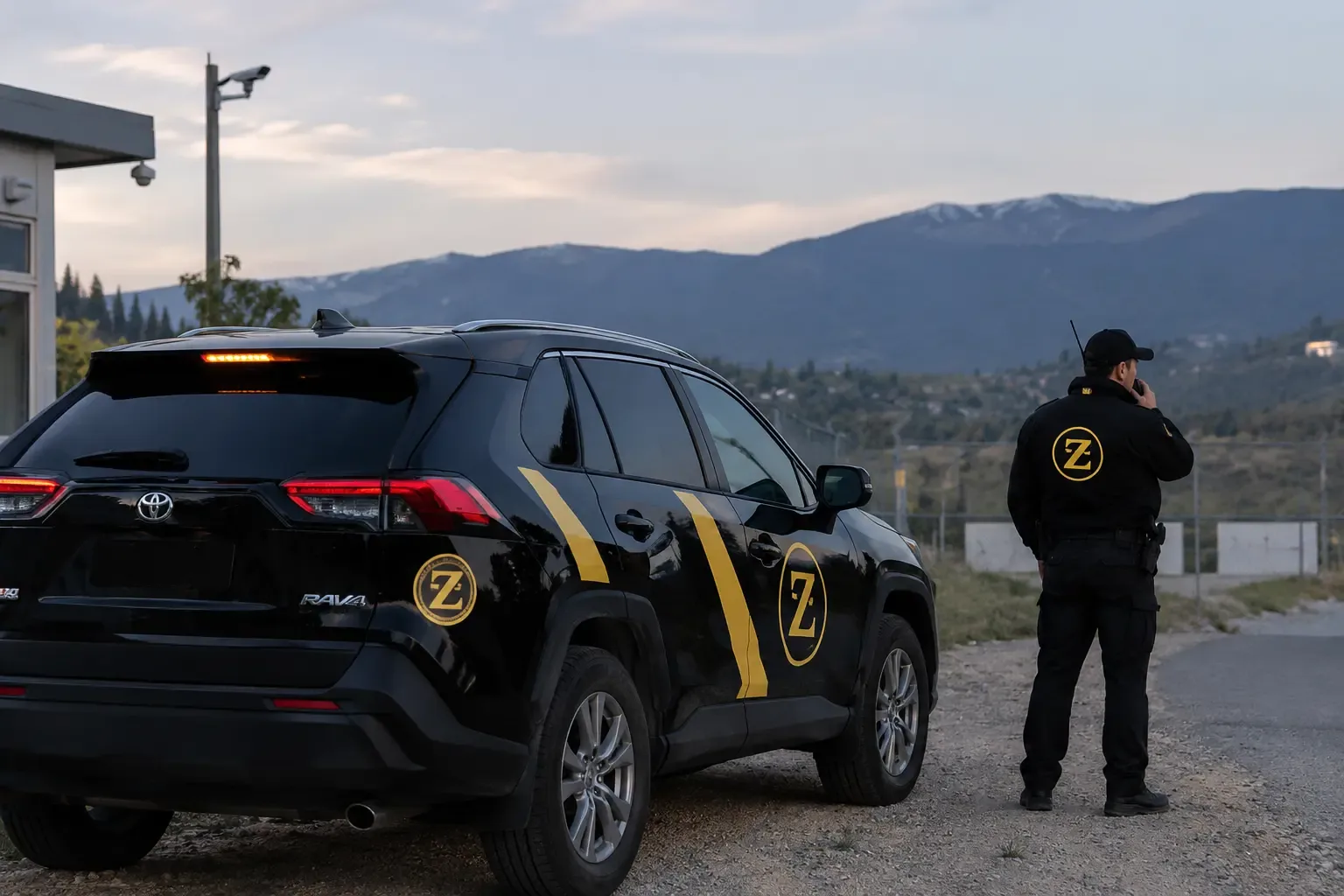
Most break-ins don't happen at two in the afternoon on a busy weekday. They happen after the last employee locks up, over a long weekend, or on a construction site that has gone quiet between phases. Mobile Patrol security is built to cover that gap. For many properties in British Columbia, it is a more practical and affordable fit than paying for a guard to stay on site all night.
If you manage a construction project, a warehouse, a strata building or a commercial plaza, this guide explains how mobile patrols actually work. It covers where they make sense and where they don't, how often a property needs them, and what to ask a provider before you sign anything.
What Is Mobile Patrol Security?
Mobile patrol security is a service in which licensed security officers drive to your property in a marked vehicle and inspect it on a planned schedule, at random times, or in response to an alarm. Instead of one guard staying in one place for a full shift, a patrol officer visits, checks the areas that matter, records what they find, and moves on.
A typical patrol visit includes:
- checking doors, gates, fences and locks
- walking parking lots, loading bays and exterior storage
- looking for signs of forced entry, theft, vandalism or tampering
- spotting and reporting trespassers or unauthorized vehicles
- checking construction equipment, fuel and materials
- confirming that doors and gates that should be locked are locked
- writing a patrol report, with photos where useful
One point to be clear on from the start: private security officers are not police, fire or paramedics. Their job is to provide a visible presence, follow your site instructions, document what they see, and call emergency services when a situation requires it.
How a Mobile Patrol Service Works
A good patrol service starts with understanding the property before the first visit. Simply driving past a few times a night is not a patrol plan.
1. Site walk and risk review
Before patrols begin, your security provider should learn the layout of your property and what puts it at risk. That includes:
- boundaries, buildings and every access point
- operating hours, and when the property sits empty
- past incidents such as break-ins, graffiti or people sleeping on site
- lighting, fencing, gates and lock condition
- high-value equipment, inventory or materials
- existing alarms and cameras
- after-hours and emergency contacts
A downtown office, a rural construction site and a 60-unit strata building have very different risks. Your patrol instructions should reflect that.
2. A patrol plan built around your property
Your patrol plan sets out when officers visit and what they check. Common options include:
- Randomized patrols at unpredictable times, which make your site harder to "time"
- Scheduled patrols at fixed times, useful for opening, closing or lock-ups
- Overnight, weekend and holiday patrols for the hours when properties are most exposed
- Lock and unlock service for gates and buildings
- Alarm response, where an officer attends when your alarm goes off
- Temporary increased patrols after an incident, or during a closure or construction phase
Many clients use a mix. For example, a fixed lock-up check at 10 p.m., followed by two random visits before morning.
3. The patrol itself
On each visit, the officer follows the agreed route, checking entrances, emergency exits, windows, loading doors, fences, storage areas, equipment, mechanical rooms and any spot with a history of problems. If an area can't be reached because of a locked gate, a blocked access road or a new fence line, the officer should note it in the report.
4. Reporting and escalation
Reporting is where you can tell a professional patrol company from a basic one. A useful patrol report includes:
- date and time of the visit
- officer name or ID
- areas inspected and their condition
- unsecured doors or gates, and what was done about them
- damage, attempted entry or suspicious activity
- photos, where appropriate
- who was notified
- recommended follow-up, such as "light over loading bay 3 is out"
If an officer finds an active break-in, a fire or someone injured, safety comes first. They follow company procedure, keep a safe distance where needed, and call 911 or the right emergency service.
What Mobile Patrols Help Prevent, and What They Can't
To be honest about it: no security service can promise that crime will never happen. What mobile patrols can do is make your property a harder, less attractive target, and catch problems early before they turn into expensive ones.
Theft and break-ins. A marked vehicle and a uniformed officer showing up at unpredictable times discourages a lot of opportunistic crime. Regular checks also catch the warning signs: a cut fence, a pried door, a lock that's been tampered with.
Vandalism and property damage. Graffiti, smashed windows, broken lights and damaged equipment are cheaper to deal with when they are found the same night instead of on Monday morning.
Trespassing. Vacant buildings, industrial yards and poorly lit lots attract people who shouldn't be there. Patrol officers report repeat access points and can recommend practical fixes such as better lighting, a stronger gate or a replaced lock.
Construction site theft. Tools, copper, fuel and machinery go missing from BC job sites far too often. Patrols during evenings, weekends and project delays put eyes on the site when nobody else is around.
Unattended alarms. When Alarm Response is part of your agreement, an officer can attend the activation, check the property from a safe position, follow your instructions and send you a report. You don't have to drive out at 3 a.m. yourself.
Mobile Patrol by Property Type
Construction sites
Construction sites change constantly. The risks during excavation are different from the risks once the framing is up, and different again when interior finishing and appliances arrive. Patrols typically cover perimeter fencing, gates, tools and equipment, fuel, site trailers, storage containers, generators, lighting and signs of entry or weather damage.
Your patrol plan should be updated whenever the site layout changes, new equipment arrives or an incident happens. For larger or higher-risk sites, a combination of patrols and dedicated construction site security may be the better fit.
Commercial and industrial properties
Offices, retail stores, warehouses, business parks, medical clinics and commercial plazas often sit empty overnight while still holding equipment, inventory and sensitive records. After-hours patrols check for unlocked entrances, unusual activity, broken glass, water leaks and lighting failures. Some of these problems have nothing to do with crime, but they still cost money if nobody catches them.
Strata and residential buildings
For strata corporations and rental buildings, patrols focus on common and exterior areas: entrances, underground and visitor parking, storage rooms, mail areas, garbage rooms, stairwells, amenity spaces and the grounds. Good officers follow building rules, respect residents' privacy, and report clearly to the property manager or strata council.
Mobile Patrol vs an On-Site Security Guard
Both services work well. They solve different problems.
| Mobile patrolOn-site security guard | ||
| Presence | Planned or response-based visits | Stays on site for the whole shift |
| Best for | Periodic inspections, visible deterrence, after-hours checks | Continuous access control and immediate on-site response |
| Typical sites | Construction sites, warehouses, vacant properties, strata buildings | Events, busy entrances, reception desks, high-traffic sites |
| Alarm response | Yes, when included | Already on site |
| Cost | Usually lower, since you pay for visits rather than full shifts | Higher, since you pay for every hour of coverage |
Plenty of properties use both. A common setup is an on-site guard during business hours and mobile patrols overnight, or patrols most of the year with a guard added during high-risk periods.
How Often Should Your Property Be Patrolled?
There's no single correct number. The right frequency depends on:
- property size and layout
- the value of what's on site
- your incident history
- lighting, fencing and camera coverage
- whether the property is occupied, and when
- insurance or contract requirements
- what's happening in the surrounding area
A small commercial building might only need one or two checks a night. A large construction site full of equipment might need several visits, or a guard on site. The goal isn't more patrols. It's the right patrols, at the right times, focused on the property's real weak spots.
How Much Does Mobile Patrol Security Cost in BC?
Pricing depends on the property's location, its size, how many visits you need per night, access requirements, the risk level, reporting needs and whether you add services like alarm response or lock-ups. Mobile patrols are usually much less expensive than a full-time on-site guard, because you are paying for visits rather than every hour of the night.
Any reputable provider should look at your property and your requirements before quoting. Be cautious about a flat price given without a single question about your site.
How to Choose a Mobile Patrol Company in BC
In British Columbia, security businesses must hold the proper business licence, and individuals doing security work generally need a valid security worker licence. Treat that as the minimum standard. Beyond it, ask these questions:
- Are your officers licensed in BC, and how are they trained?
- How are patrols documented, and when do I receive the reports?
- Can patrol times be randomized, scheduled, or both?
- What happens if an officer finds an open door or a damaged fence?
- How do you handle alarm activations?
- Is a supervisor available if something goes wrong at night?
- Can the patrol plan change after an incident?
- What happens if an area can't be accessed?
- Do you carry liability insurance?
- Have you patrolled properties similar to mine?
Don't choose on price alone. Compare scope, officer qualifications, reporting, communication, supervision and insurance. The cheapest quote can turn out to be expensive if nobody tells you about the open gate until a week later.
How to Get Your Property Ready for Patrols
You can make any patrol service more effective by:
- providing an accurate site map, with restricted areas marked
- sharing up-to-date emergency and after-hours contacts
- giving access codes and keys through a secure process
- fixing broken exterior lighting
- keeping gates and access routes clear
- flagging high-value equipment and materials
- listing authorized contractors and vehicles
- telling your security company about construction activity or changes on site
Mobile patrols work best as one layer of a broader plan that also includes good lighting, solid fencing and locks, alarms, cameras such as remote camera monitoring, and clear procedures for your staff.
Frequently Asked Questions
What is mobile patrol security?
It's a service in which licensed security officers visit your property in a marked vehicle and inspect it according to an agreed patrol plan, either scheduled, randomized or in response to an alarm.
Is mobile patrol good for construction sites?
Yes. Patrols are well suited to checking fencing, gates, equipment, tools, fuel and materials overnight, on weekends and over holidays, when sites are most exposed to theft.
Can mobile patrol replace security cameras?
Usually not. Cameras watch and record, while patrol officers physically check the property and spot things a camera can't, such as an unlocked door or a water leak. Most properties get the best results from using both.
Do mobile patrol officers respond to alarms?
They can, when alarm response is included in your agreement. Access instructions, contacts and reporting steps should be set up in advance.
How much does mobile patrol security cost?
It depends on location, property size, patrol frequency, access, risk level and add-on services. A provider should review your site before giving an accurate quote.
Does mobile patrol guarantee that crime won't happen?
No security service can guarantee that. Patrols reduce risk through visible deterrence, early detection, reporting and response, as part of a broader security plan.
Talk to Zampa Security About a Patrol Plan
You don't have to wait for another break-in, another graffiti cleanup or another 3 a.m. alarm call before tightening up your security.
Zampa Security provides mobile patrol, construction site security, alarm response, fire watch, event security and remote camera monitoring for commercial, residential, construction and event properties in British Columbia. We'll walk your property, identify the weak spots, and build a patrol plan around your schedule, your risks and your budget.
Request a free mobile patrol assessment
📞 +1 (236) 867-3519
✉️ info@zampasecurity.com
📍 Serving all over Canada